
The two-centimeter hole
Krakow, Wawel hill. Friday, April 13, 1973. In the cathedral, a drill works on the wall of a crypt. It is not the king's that interests the scholars, but the adjacent chamber: the hole starts from the tomb of Michał Korybut Wiśniowiecki and must cross about ninety centimeters of stone. When the tip comes out the other side, the hole measures just two centimeters. This is told by the diary of Stanisław Kozieł, chief archaeologist of Wawel, cited by journalist Zbigniew Święch.
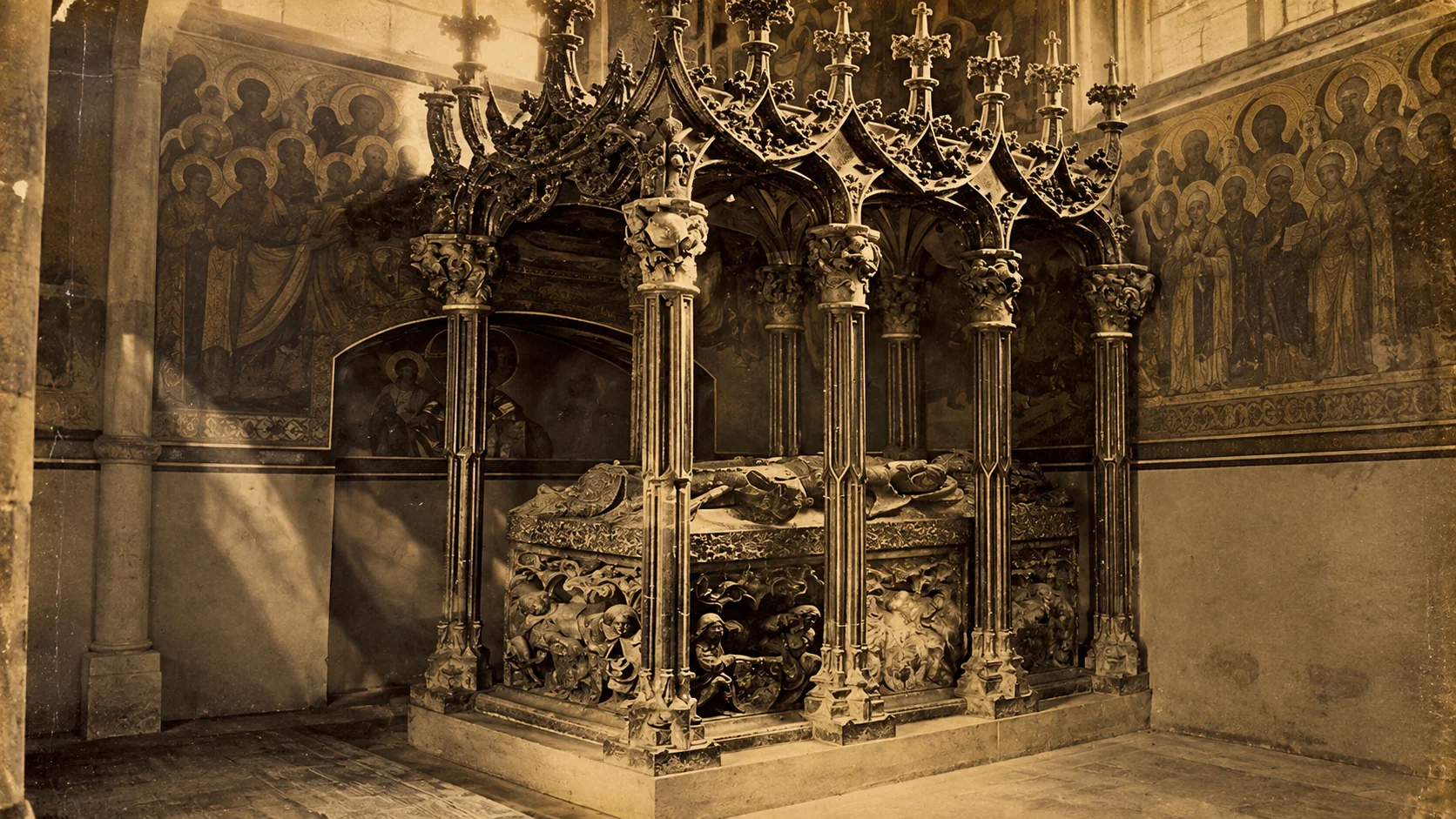
On the other side is Casimir IV Jagiellon, King of Poland. According to Kozieł himself, no one had ever entered that chamber since the day of the funeral. Almost five centuries have passed.
However, the hole shows nothing. They try with a small lamp, then try again. The men working that day are archaeologists, conservators, art historians, and engineers of the Royal Castle. Within two years, four names linked to that site will appear in obituaries and then in a book.
To understand why that wall mattered so much, you first need to know who was sleeping behind it.