
Victor Arcana's new book, Hunt for the Lost Ark, has been released – buy it now on Amazon.

Victor Arcana Victor Arcana

Fever That Kills Children: The Death of the Hittite Princess

A king without a capital, generals begging for war chariots, and a girl who dies of fever. The archive found in Turkey tells the worst days of the Hittites.

2 min read
Febbre che uccide i bambini: morta la principessa degli Ittiti

The Girl of Ziulila

Central Anatolia, mid-14th century BC.

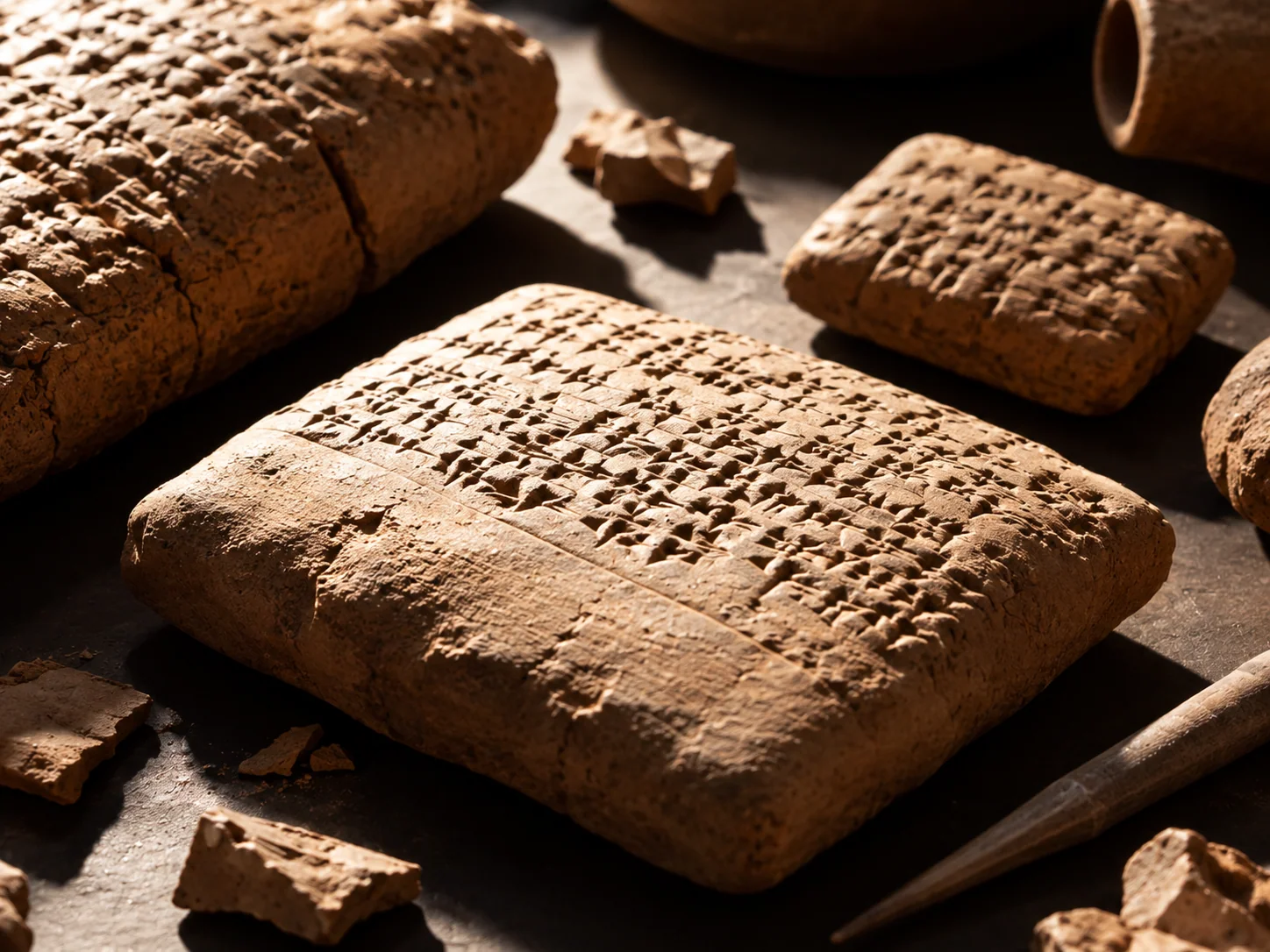
A seer writes to his king on a clay tablet. The news concerns a princess. She is so small that she is still being breastfed. She fell ill in a city called Ziulila.

Other sacred specialists question the omens to find out what will happen to her. One tablet records their attempts. Another records the end: the girl has died, and a funeral rite was held for her.

Around, a high fever passes from city to city. It mainly affects newborns and children.

These tablets remained underground for about 3,400 years. They have now come to light in a field in the Turkish province of Sivas.

The City on the River

The place today is called Kayalıpınar, in the Yıldızeli district, about forty kilometers west of Sivas. It lies on the north bank of the Kızılırmak, the river the Hittites called Marassanta and the Greeks Halys.

For decades scholars debated where Šamuḫa was, a city frequently mentioned in Hittite texts. Some searched for it on the Euphrates. Then, in 1999, a first fragment of a tablet emerged from this land. Excavations resumed in 2005 with Andreas and Vuslat Müller-Karpe, and fragments increased year after year: by 2015 there were more than a hundred. Today the identification of Kayalıpınar with Šamuḫa is widely accepted.

The site's history is long. Initially it was a stop for Assyrian merchants, and that first settlement ended in a great fire. Then the Hittites built a new city there, with a palace complex. A goddess assimilated to Ištar, lady of love and war, was worshiped here. In 1976 historian René Lebrun defined Šamuḫa as the religious pivot of the Hittite empire.

But in the 14th century the city on the river became something else: a base from which to resist.

One Hundred Eighty-Four Fragments

Since 2021 the excavation has been directed by Çiğdem Maner, archaeology professor at Koç University in Istanbul, under the concession of the Turkish Ministry of Culture and Tourism. By 2025 her team had recovered 53 tablets and fragments at a precise point of the site. In the 2026 campaign, at the same point, another 131 were found.

The total is 184. The announcement came on October 8 from Minister Mehmet Nuri Ersoy, who spoke of the most extensive Hittite language archive discovered in the 21st century.

The texts are written in Hittite and Hurrian. The ministry dates them to the reign of Tudhaliya II, around the mid-14th century BC. A clarification is needed here: specialists do not agree on the numbering of kings with this name, and the same ruler appears in many studies as Tudhaliya III, with a reign roughly between 1380 and 1350 BC.

The archive contains letters, prayers, rituals, divination texts. And three stories that, read together, tell of a kingdom on its knees.

The Children's Fever

The first is the epidemic. The tablets describe a disease with high fever that moves from city to city and seems to target the youngest.

At court the fear is documented line by line. The royal family has the health of young princes and princesses monitored. Senior officials also seek answers for their own children. And who do they turn to? The seers. In the released texts the question is not how to cure the children, but what will happen to them.

It is in this context that the nursing princess appears. One document follows her while she is ill, with efforts to read her fate in the omens. A second, sent to the king by a seer, says where she fell ill: Ziulila, a city no one today can locate on the map. A third records her death and funeral rites.

What disease it was, researchers do not know. No identification has been proposed.

Soldiers, Horses, Chariots

The second story comes from the west. It is a letter from Hittite generals stationed in western Anatolia, reaching the king while he is in Šamuḫa.

The tone is that of someone who has no more time. Enemies surround the territory. The generals ask for soldiers, horses, and war chariots. They warn that without reinforcements the army could be destroyed. And they add a phrase that, written to a ruler, weighs like a stone: if help does not arrive, they do not take responsibility for what will follow.

In the news released so far the enemy has no name. We do not even know if the king responded, nor if those chariots ever left.

The Diary of the Bird Men

The third story is the strangest. One tablet resembles a travel diary. It is kept by some augurs who left Šamuḫa. They note the roads traveled, the cities where they stop, and the birds they see.

The Hittites read the will of the gods in the behavior of birds, and they did so methodically. Already in 2025, in the same excavation, a tablet of bird oracles with a hole in the center and signs of a cord was found: it was perhaps hung or carried during rituals.

According to the ministry, the new texts reveal details so far unknown about how those omens were observed, evaluated, and interpreted. In other words: a besieged and sick state sent officials around to count birds. And archived their reports along with requests for war chariots.

What We Still Don't Know

It must be said clearly: for now there is a press release and statements from authorities. No translation has been published, no scientific study has come out. It will be up to Hittitologists to read, translate, and publish the texts.

Proportions must also be kept in mind. One hundred eighty-four pieces are few compared to the tens of thousands of tablets and fragments returned from Hattusa, the capital, since the early 20th century.

But Hattusa preserves the official voice of an empire. Kayalıpınar seems to preserve something different: the papers of a court in its worst days, among sick children and collapsing fronts.

There is also a temptation to avoid. Later King Mursili II wrote desperate prayers for another plague, which he attributed to Egyptian prisoners paraded in the capital. Nothing published links that contagion to the fever of the new tablets.

The Paralyzed Country

But there is a more disturbing way to read all this.

Šamuḫa was not the capital. The king was there because the capital was lost. According to later Hittite texts, which may exaggerate, the kingdom was attacked from multiple directions; enemies, including the Kaska, burned Hattusa and the court moved to the river. In those years Pharaoh Amenhotep III wrote that he had heard everything was over and that the land of Hattusa was paralyzed.

If the ministry's dating is correct, these tablets are then the archive of a state that contemporaries considered dead. A king without a capital. Generals who decline all responsibility. Children dying of fever in the palaces. And, as a response, men sent to watch the sky.

That kingdom did not die. It recovered and became a great power again. Then the plague really arrived, lasting about twenty years: it killed King Suppiluliuma and his heir. Researcher Siro Igino Trevisanato proposed it was tularemia, and that it ended up becoming a weapon: sick rams appearing in the villages of western enemies. It would be the first known case of biological warfare. It is a hypothesis, and concerns a different epidemic.

Of the princess of Ziulila, for now, only one personal detail has been revealed.

She was still nursing.